Common Fiberglass Problems
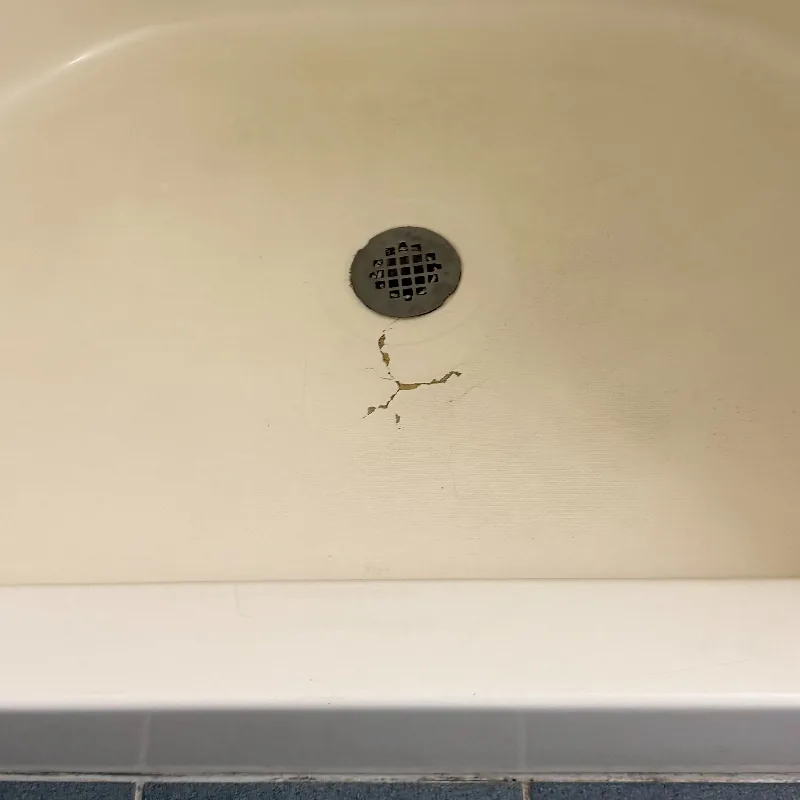
Fiberglass bathtubs and shower units are popular for their affordability and light weight, but they can develop problems over time. The flexible nature of fiberglass means it can crack from impact, develop soft spots from moisture intrusion, or even develop holes.
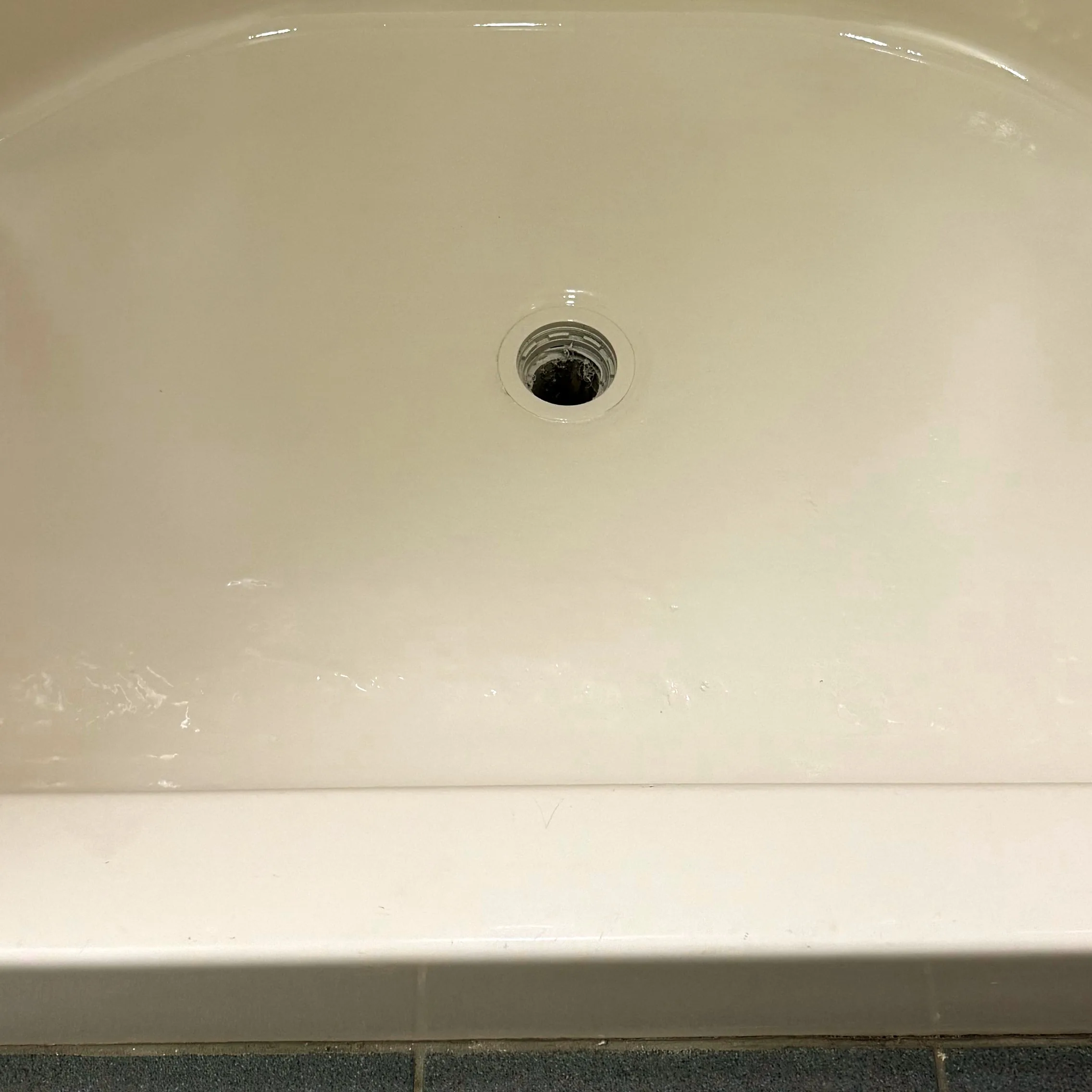
The good news is that fiberglass is very repairable. With the right materials and techniques, we can restore both the strength and appearance of damaged fiberglass—often making the repair stronger than the original.
What We Repair
- Fiberglass cracks — From hairline to structural, we repair cracks properly
- Holes and punctures — Impact damage, removed fixtures, or wear-through
- Soft spots — Spongy or flexible areas that indicate structural compromise
- Shower pan damage — Floor cracks and leaks in fiberglass shower bases
- Fiberglass tub/shower combos — One-piece units with damage to walls or floor
Why Soft Spots Are Serious
If your fiberglass tub floor feels spongy or flexible when you step on it, that's a sign of delamination—the fiberglass layers are separating, often due to water intrusion. Left alone, this will worsen and can eventually lead to complete failure.
We repair soft spots by removing the damaged material, drying out any moisture, and rebuilding the area with proper fiberglass layers. This restores structural integrity—not just appearance.
Fiberglass Repair vs. Liner Installation
Some companies sell "tub liners" that fit over your existing tub. While this can hide damage, it doesn't fix it. Water can still get trapped between the liner and your tub, potentially making problems worse.
True fiberglass repair addresses the actual damage, restoring your tub's integrity. It's also significantly less expensive than a liner or full replacement.