Why Do Bathtubs Crack?
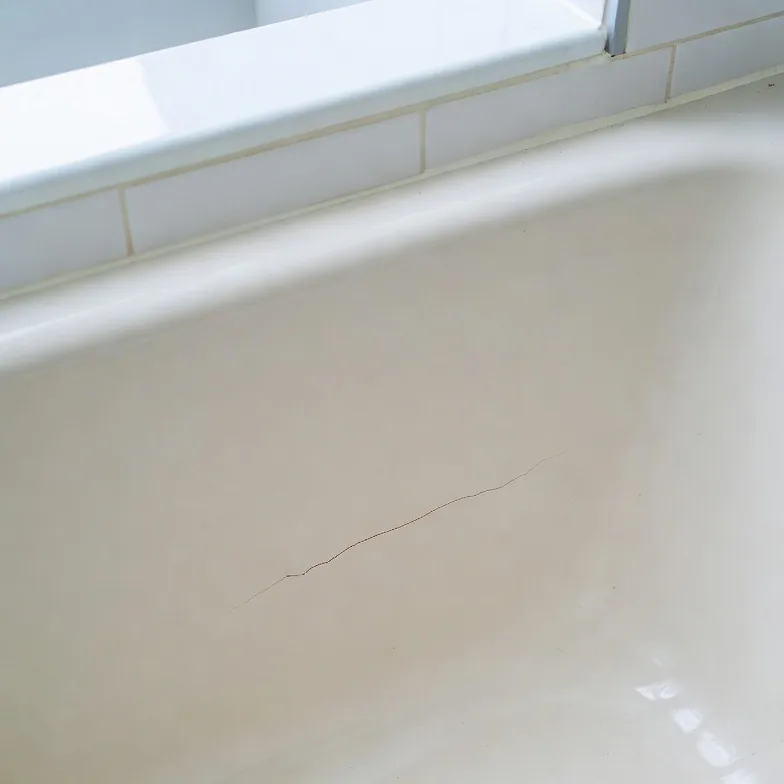
Bathtub cracks happen for several reasons: flexing from inadequate support underneath, impact damage, temperature stress, or simply age and wear. Fiberglass and acrylic tubs are particularly prone to cracking because they're more flexible than cast iron or steel.
The danger with cracks isn't just cosmetic. Even hairline cracks can allow water to seep through, potentially causing subfloor damage, mold growth, or structural problems. That's why addressing cracks quickly is important— and why proper repair matters.
Types of Cracks We Repair
- Hairline cracks — Fine surface cracks that can still allow water penetration
- Stress cracks — Cracks caused by flexing, often appearing in corners or around drains
- Impact cracks — Cracks from dropped objects or heavy impact
- Spider cracks — Networks of small cracks radiating from a central point
Repair vs. Refinishing
Some companies will recommend refinishing (coating) your entire tub to cover a crack. This doesn't actually fix the crack—it just hides it temporarily. Eventually, the crack will telegraph through the new coating.
True crack repair addresses the actual damage: stopping the crack from spreading, reinforcing the area if needed, and then finishing with professional color blending. This restores both appearance and structural integrity.
How Long Does Crack Repair Take?
Most crack repairs take 2-4 hours depending on the size and complexity. Structural repairs may require additional curing time. Your tub is typically ready to use the next morning.